Streamlining Case-Law Precedent Extraction
Writer: Sangram K
Header: Giammarco Boscaro via Unsplash
Legal research is a cornerstone of building strong arguments for law firms. However, manually tracking higher court judgments and extracting precedents is time-consuming and inefficient. Traditional research methods rely on human memory and keyword-based searches, which often fail to capture the full context of legal rulings.
With advancements in artificial intelligence, particularly Large Language Models (LLMs), law firms can now leverage AI-driven retrieval systems to streamline case-law research. This guide outlines how to implement an AI-powered retrieval system that automates legal precedent extraction, ensuring accuracy and efficiency.
Challenges in Legal Precedent Extraction
Manual Research Limitations
- Time-consuming process of reading through court judgments
- Risk of human error in identifying relevant precedents
- Inefficient retrieval of case-law information due to reliance on keyword searches
The Need for AI-Driven Solutions
- Automate case-law research through intelligent retrieval systems
- Extract legal precedents efficiently using LLMs
- Enhance accuracy with metadata tagging and advanced search techniques
AI-Powered Legal Precedent Extraction
Automating Case-Law Research with LLMs
Legal research analysts manually sift through court judgments to extract relevant information for their cases. With AI, this process can be automated by feeding judgments as text into an LLM.
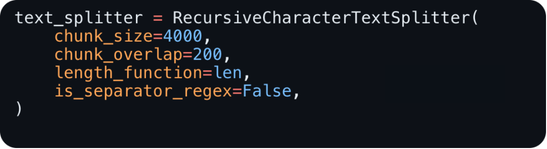
Implementing a Chunking Strategy
LLMs have limitations, such as restricted context windows, making it impractical to process entire legal judgments containing millions of tokens. To address this:
- Split text into overlapping chunks to preserve context.
- Assign metadata to each chunk for improved retrieval accuracy.
Example Code for Chunking:
Enhancing Search with Vector Databases
Moving Beyond Traditional Keyword Search
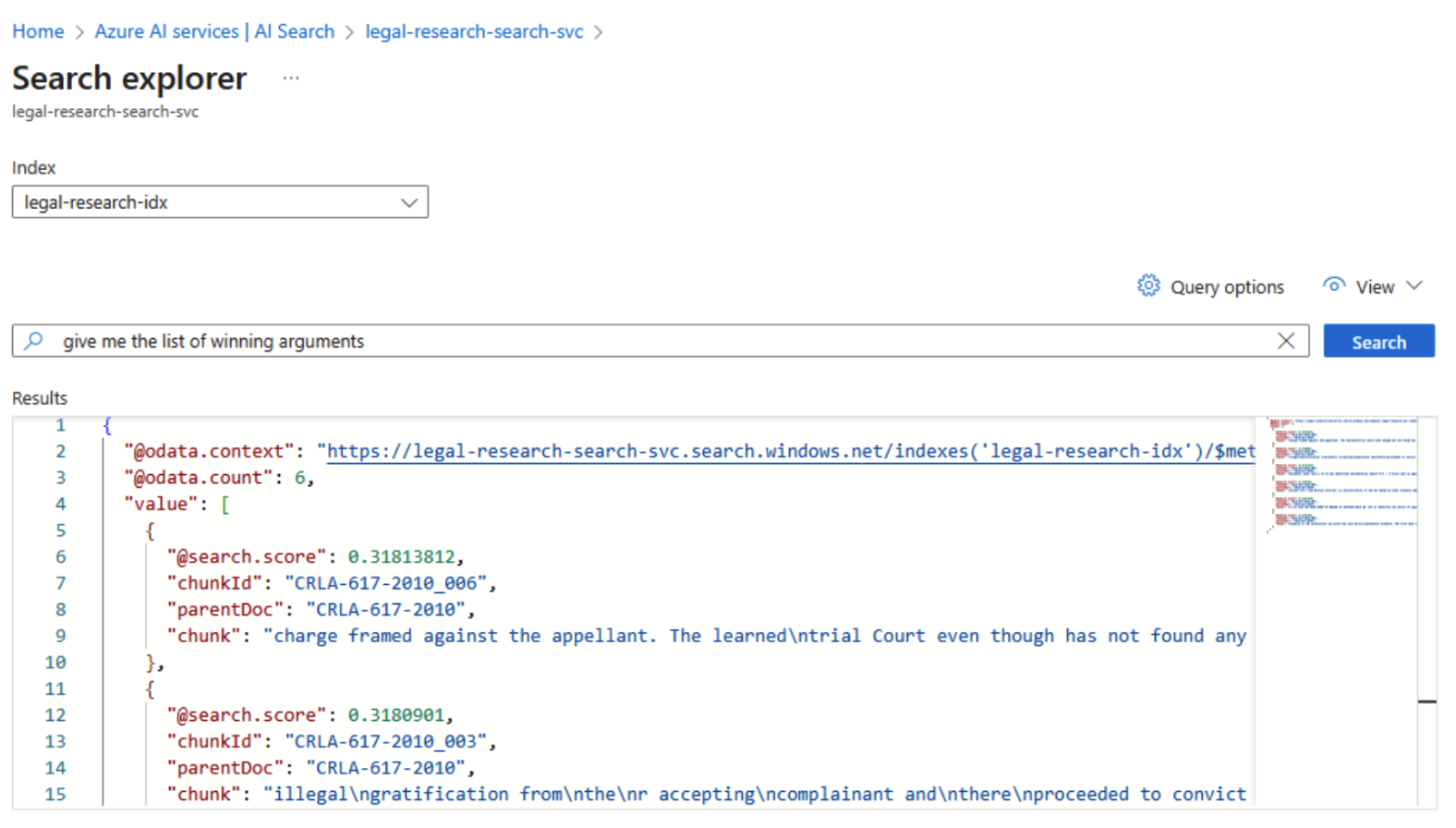
Full-text keyword search alone is insufficient for accurate legal research. Instead, vector search enhances retrieval accuracy by understanding the semantic meaning of queries.
Implementing Vector Search with Azure search
1.Generate vector embeddings for each text chunk.
2.Store metadata and embeddings in a vector database.
3.Query the database using semantic search techniques.
Sample Code for Vector Search:
Query Enhancement Strategies
Raw queries may not always retrieve the most relevant case-law precedents. AI can enhance queries using domain-specific prompts, improving retrieval efficiency.
Three AI-Driven Search Mechanisms
- 1. Full-Text Search: Extracts keywords and assigns relevance scores.
- 2. Vector Search: Uses embeddings to find semantically relevant chunks.
- 3. Hybrid Search: Combines full-text and vector search for superior accuracy.
AI-Driven Query Optimization
To improve query relevance, an LLM can rewrite search queries before execution, ensuring higher-quality search results.
Deposition Processing Using AI
Legal depositions contain witness testimony, which can also be processed using AI.
- 1.Apply the same chunking process : as used for court judgments.
- 2.Enhance queries using domain-specific prompts for better accuracy.
- 3.Use AI Agents to generate structured legal arguments.
The Role of AI Agents in Legal Research
AI Agents function as intelligent programs that:
- Break down complex tasks into manageable steps.
- Automate legal argument generation.
- Structure information hierarchically (paragraphs → sub-sections → sections → full drafts).
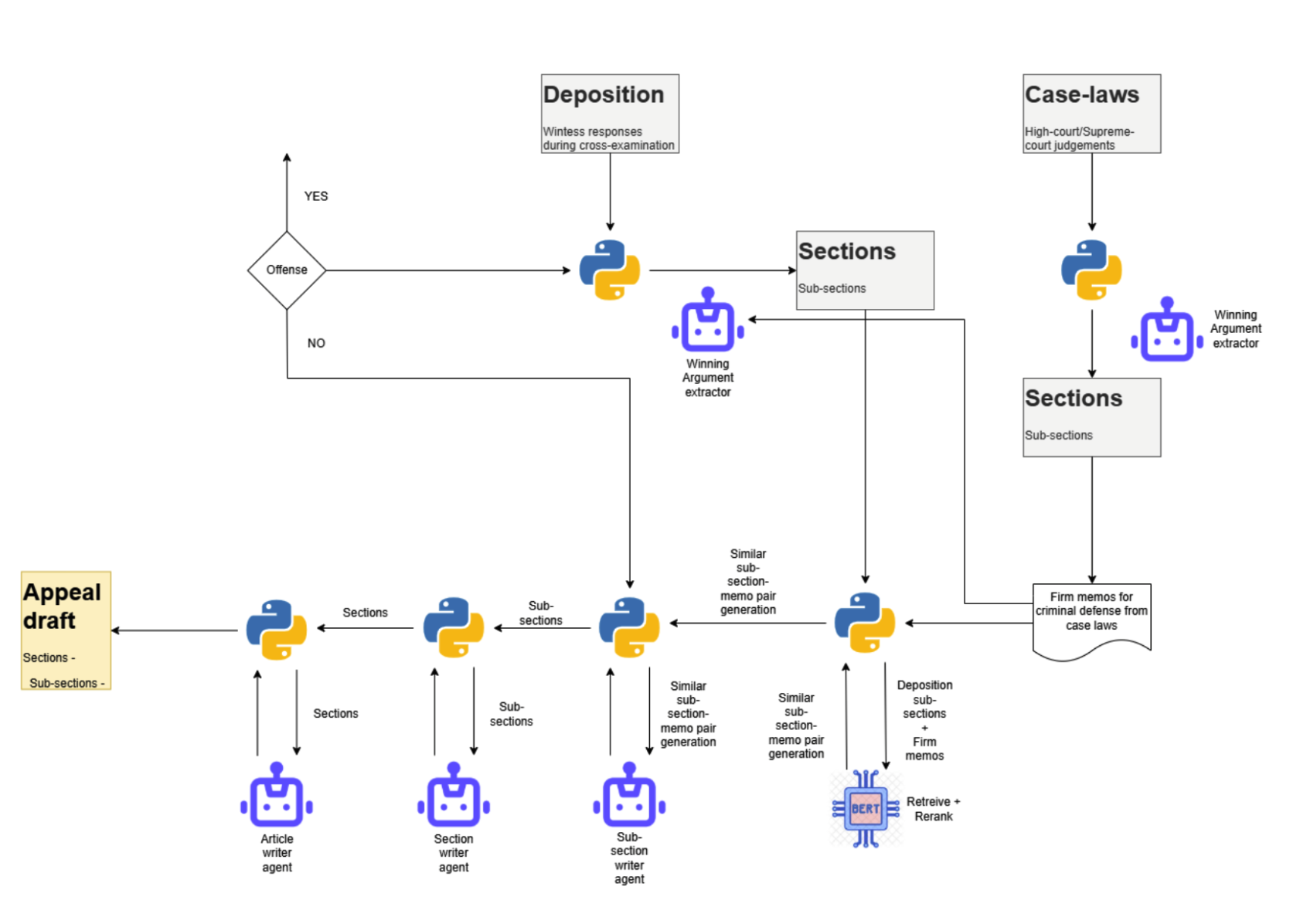
Agent-Oriented Legal Research Workflow
Implementing AI Agents with Microsoft Autogen
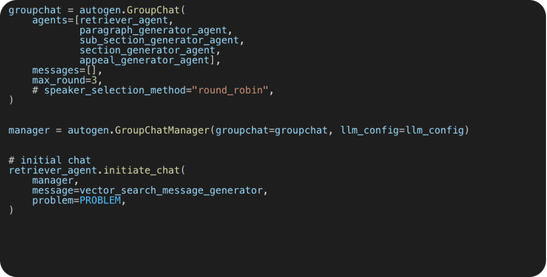
Microsoft Autogen enables orchestration of multiple AI agents for structured legal research.
AI Agents in Legal Research
1. Retriever Agent: Finds relevant case-law precedents.

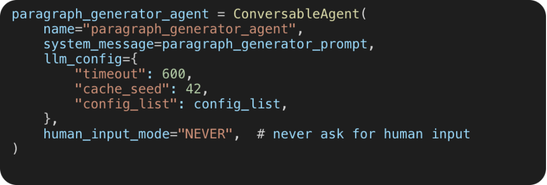
2. Paragraph Generator Agent: Constructs legal arguments based on retrieved information.
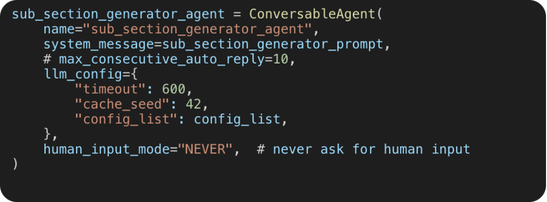
3. Sub-Section Generator Agent Organizes paragraphs into coherent sub-sections.
4. Section Generator Agent: Combines sub-sections into comprehensive sections.
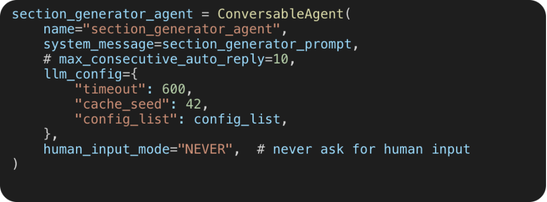
5. Appeal Draft Generator Agent: Produces structured legal appeal drafts.
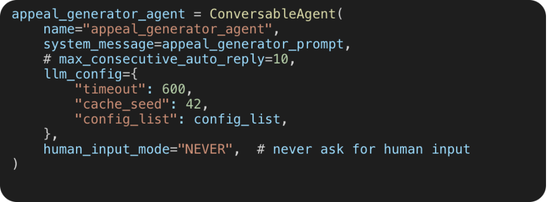
Example AI Agent Orchestration:
AI-Driven Appeal Draft Generation
Creating Structured Legal Documents
With AI agent orchestration, structured legal drafts can be generated efficiently.
Workflow Steps:
- Retrieve relevant legal precedents.
- Generate structured paragraphs and sub-sections.
- Combine content into full legal drafts.
- Implement feedback loops to refine outputs.
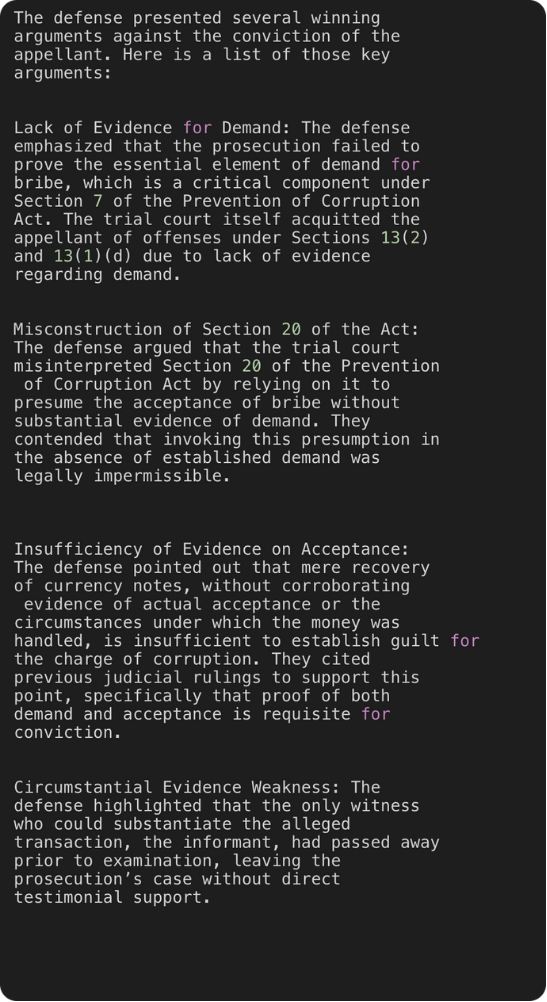
Sample Appeal Draft Output
Conclusion: The Future of AI in Legal Research
If the data is valid, click Import. You’ll receive a confirmation message upon successful import.
- Automate precedent extraction
- Improve search accuracy with hybrid search techniques
- Generate structured legal arguments efficiently
- Interested in AI-powered legal research solutions? Contact Tekgenio today for a demo and consultation on implementing AI-driven case-law retrieval systems.
Interested in AI-powered legal research solutions? Contact Tekgenio today for a demo and consultation on implementing AI-driven case-law retrieval systems.
https://learn.microsoft.com/en-us/azure/search/search-what-is-azure-search https://techcommunity.microsoft.com/blog/azure-ai-services-blog/azure-ai-search-outperforming-vector-search-with-hybrid-retrieval-and-reranking/3929167 https://arxiv.org/html/2407.01219v1 https://microsoft.github.io/autogen/0.2/docs/topics/retrieval_augmentation